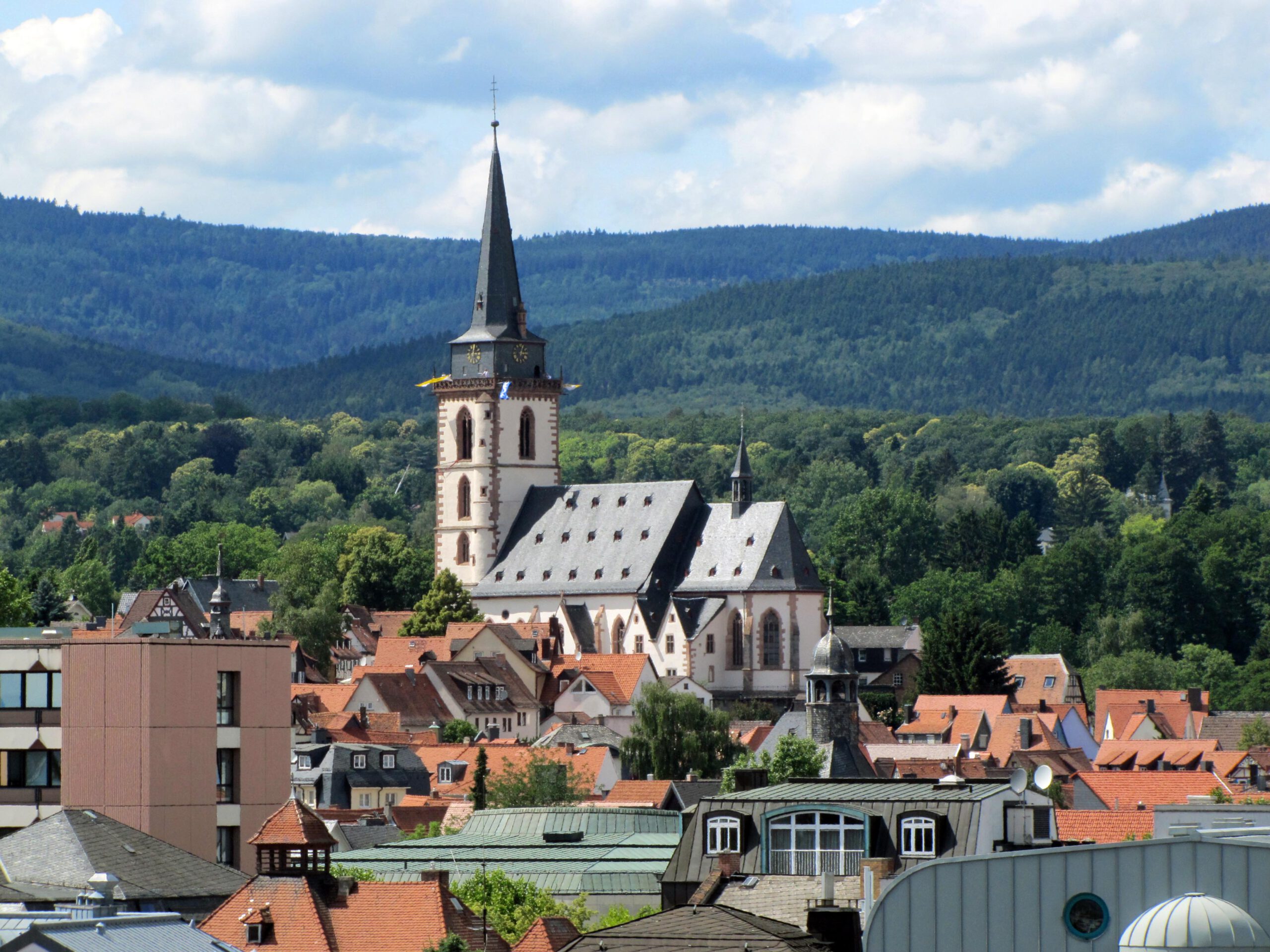
We are proud to announce the Twelfth Spanish-German Symposium on Applied Computer Science (SGSOACS 2026). The SGSOACS symposia were born to promote collaboration in applied Computer Science primarily but not exclusively between Spanish and German universities. This edition is organized jointly by the University of Cadiz, the Frankfurt University of Applied Sciences, and the Complutense University of Madrid.
Venue
SGSOACS 2026 will be held from June 29 to July 1st, 2026 at
Conference Venue Waldtraut Oberursel
Hohemarkstrasse 192
61440 Oberursel
Germany
The programme includes high quality talks on the following topics:
- Complex Event Processing
- Cyber Security and Blockchain
- Data Science
- Human-Activity Recognition (HAR)
- Smart Cities and Ambient-Assisted Living
- Software Architectures
- Software Engineering
- Software Testing
In its inception, the symposium goal is to present highly speculative research as a series of talks followed by open questions and debate.
We are happy to invite any student, researcher, or professional interested in these topics to join us and participate in the event. While we believe that this edition will bring in further opportunities for the existing collaboration within the Spanish-German community of Computer Scientists we explicitly encourage researchers from any country or institution to submit papers and to attend. Regarding ongoing collaborations, this will surely increase the quality of our current and future research.
Please find the details of the registration and submission process below.
Important Dates
Note, that we have extended the submission date, but the extended date will be hard deadline and not moved further!
| Submission Date | |
| Acceptance Date | |
| Camera Ready Submission | 15.06.2026 |
| Registration Deadline | 15.06.2026 |
Registration
Online registration is closed.
Registration fee is 450,- EUR per participant for on-site participation.
Paper Submission
Any accepted paper will be published as a Communications in Computer and Information Science (CCIS) proceedings by Springer Nature like the Proceedings of the 11th SGSOACS. Please follow the process as described below.
Contributions must be written in English, which is also the working language of the symposium. Two kinds of contributions are allowed for publishing with Springer:
- Full Papers, 12-15 pages (for orientation, hard limit 20 pages excluding an optional appendix)
- Short papers, 6-11 pages
In addition Extended abstracts, with a maximum length of one page, and which are useful for preliminary results or discussions are allowed, too but will not be included in the proceedings.
Submission Formats
All authors should read the Information for Authors of Springer Computer Science Proceedings, and follow the Instructions for Authors of Papers to be Published in Springer Computer Science Proceedings. Please note, that all authors have to ensure to make use of the Templates provided (see below).
LaTeX
The template is available here.
Word
The template is available here.
Submission System
Contributions have to be submitted through the Meteor system by Springer.
Review
Papers will be refereed by at least three members of the Programme Committee and ranked based on the criteria of originality, significance, quality and clarity. No rebuttal will be possible.
License
All authors are expected to sign the Springer Nature License to Publish agreement prior to publication.
Code of Conduct
All authors must adhere to the policies defined in the (Code of Conduct) by Springer.
Organising Committee
- Jörg Schäfer, Frankfurt University of Applied Sciences, Germany
- Matthias Wagner, Frankfurt University of Applied Sciences, Germany
- Robin Mueller-Bady, Frankfurt University of Applied Sciences, Germany
Programme Committee
- Jörg Schäfer, Frankfurt University of Applied Sciences, Germany (Chair)
- Juan Boubeta-Puig, University of Cadiz, Spain (Co-Chair)
- Robin Mueller-Bady, Frankfurt University of Applied Sciences, Germany
- George Bargiannis, University of Huddersfield, UK
- Christian Baun, Frankfurt University of Applied Sciences, Germany
- Fatima Sajid Butt, Frankfurt University of Applied Sciences, Germany
- Peter Ebinger, Frankfurt University of Applied Sciences, Germany
- Maria del Carmen de Castro-Cabrera, University of Cadiz, Spain
- Sara Balderas Díaz, University of Cadiz, Spain
- Juan José Domínguez-Jiménez, University of Cadiz, Spain
- Bernabe Dorronsoro, University of Cadiz, Spain
- Antonio Garcia-Dominguez, University of York, United Kingdom
- Gabriel Guerrero, University of Cadiz, Spain
- Martin Kappes, Frankfurt University of Applied Sciences, Germany
- Manuel Méndez Hurtado, Complutense University of Madrid, Spain
- Jesús Rosa-Bilbao, University of Cadiz, Spain
- Baris Sertkaya, Frankfurt University of Applied Sciences, Germany
- Martin Simon, Frankfurt University of Applied Sciences, Germany
- Vittorio Stile, Universitas Mercatorum, Italy
- Kevin J. Valle-Gómez, University of Cadiz, Spain
- Matthias Wagner, Frankfurt University of Applied Sciences, Germany
Programme
In the following, you can find the conference program.